


The Tiger Forex Report 06-15-26
The Tiger Forex Report – Week of 06/15 – 06/19/2026
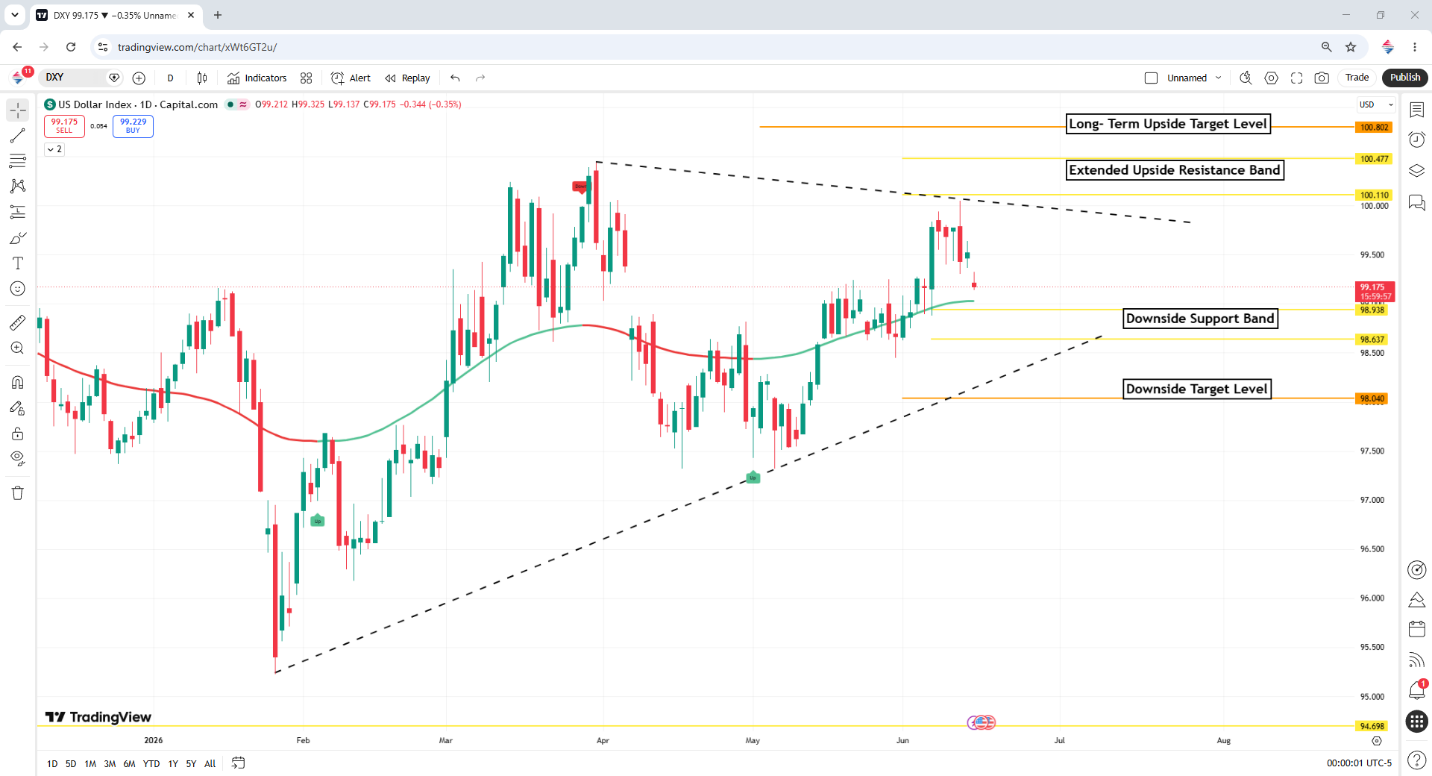
USD weakness is kicking off the new week, and the DXY is most likely on a mission to slam support toward the downside support band. We are heading into FED time. Speaking of which I have a nice article that I have written as a bonus this week for you below.
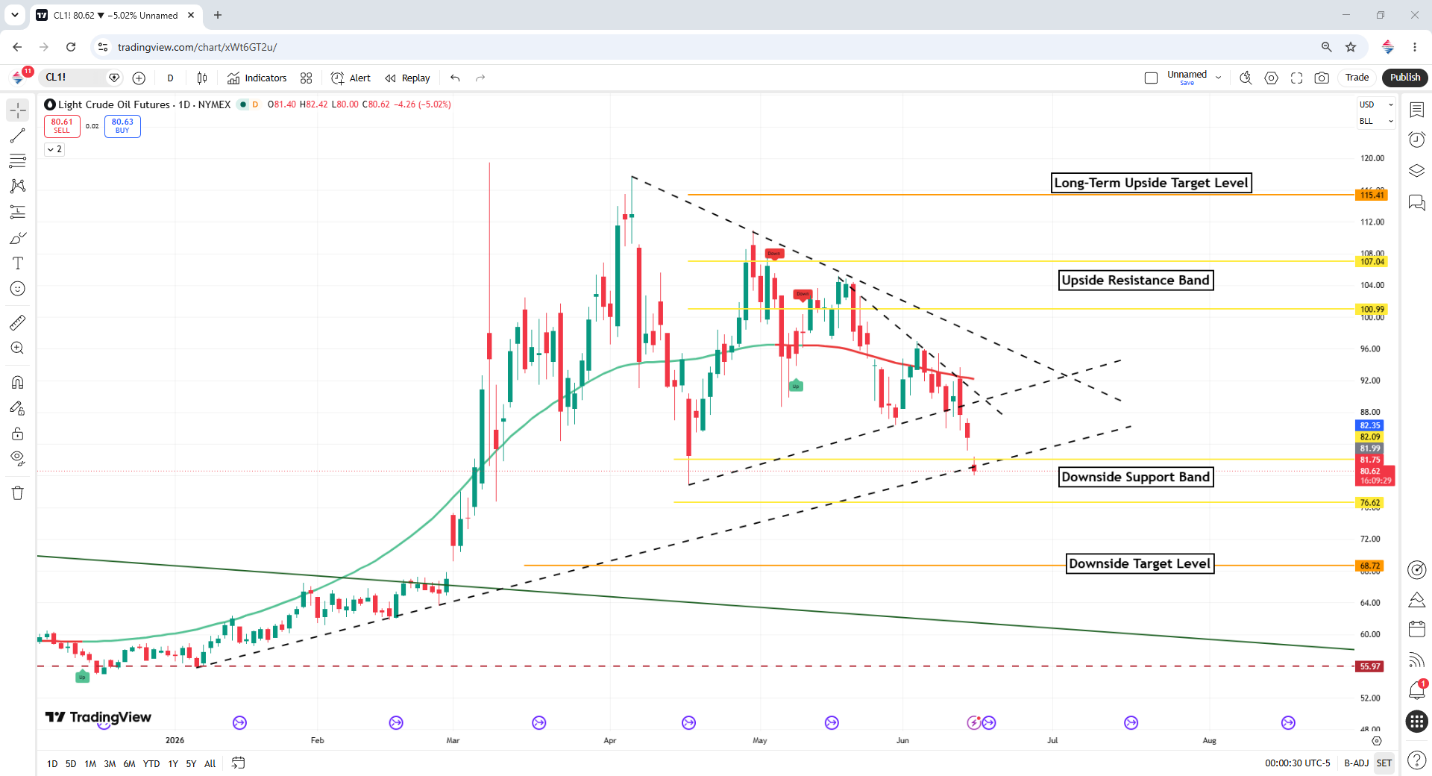
Crude Oil Bears are slamming through support on global news touching off new move lows…again. Will the downside support band hold? We shall see. Selling pressure is expected to build, and the downside target level could be tagged before months end.
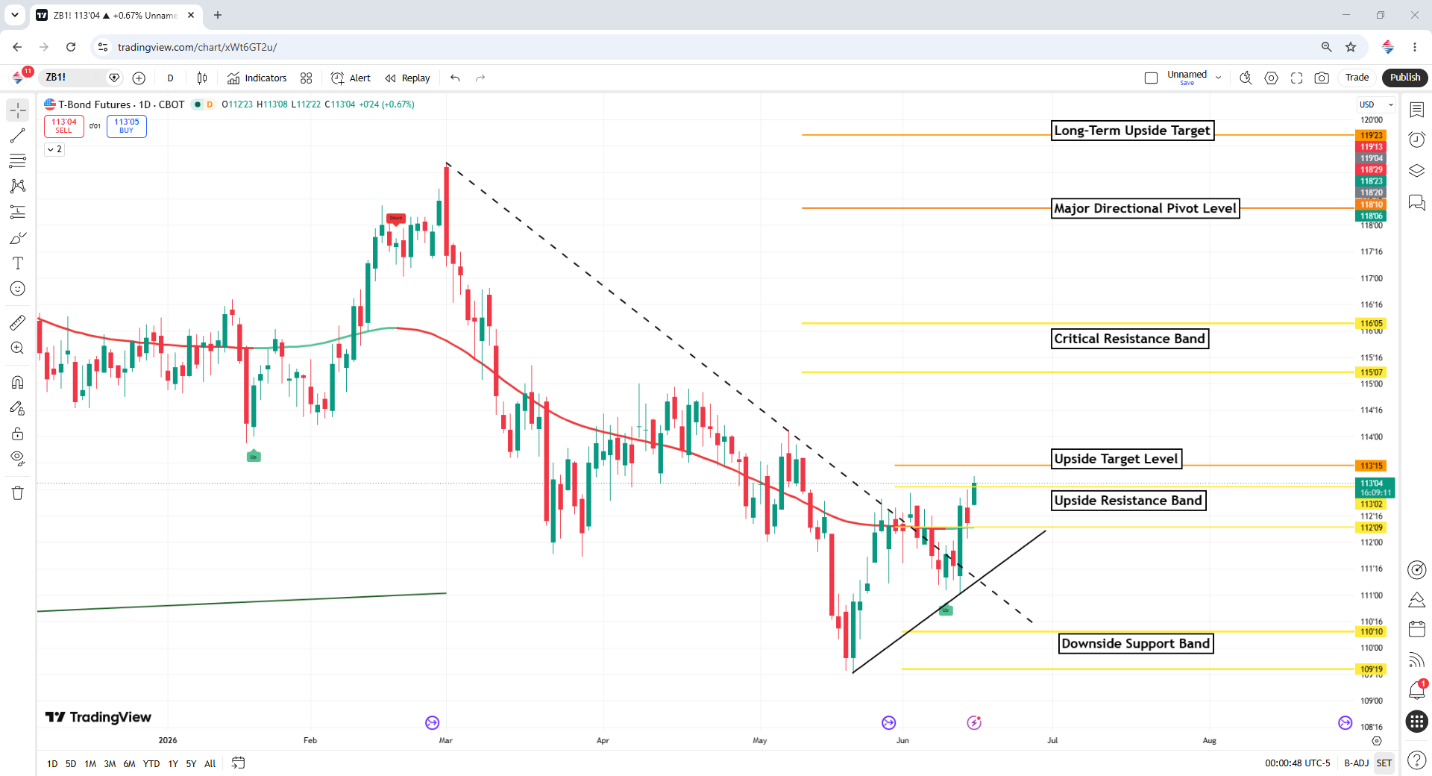
30yr T-Bond Yields are in retreat on global news even though the “talking heads” are touting a rate hike. A challenge of the upside target level is very likely. If there is a close above here there is a good chance that the Bulls could make a run for the critical resistance band. Breaking trend soon? Getting a lead on Rate Cuts? Keep a close eye on pricing everyone, and stop watching the Birdie.
EURUSD Weekly Outlook:
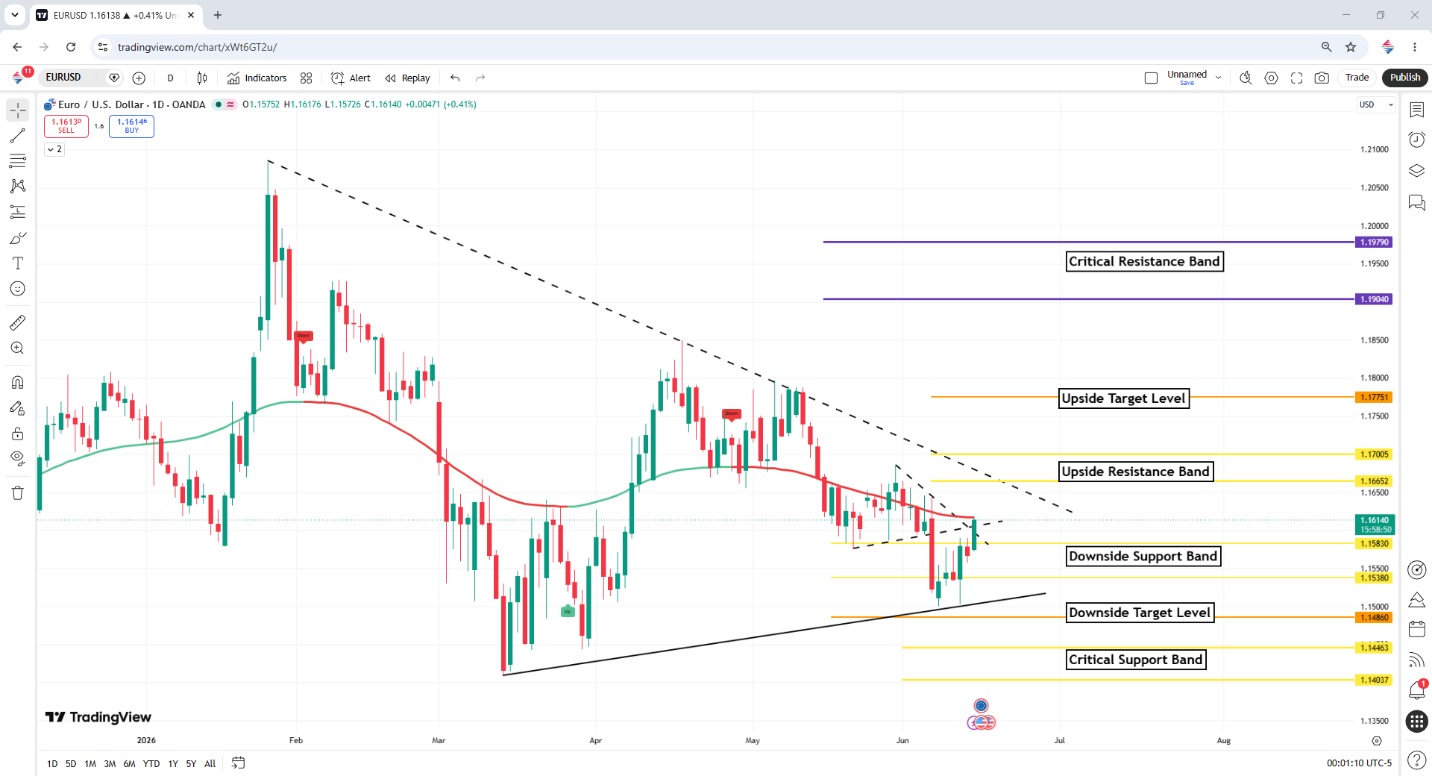
A newer swing low was set last week, and now the market is in a Bullish leg higher taking advantage of USD weakness. Odds are strong that there will be a challenge of the upside resistance band. If this is just a corrective move this should put a ceiling on a higher trending trade. Should the Bulls get above here it would place this currency back into the wide range trade area it has been drifting into since the end of 2025. This market is likely to continue to press newer move highs and higher move lows this week unless there is a big shift in Yields or Crude Oil. Anything is possible so be nimble and aware. If the Bears get a break to fall below the downside support band, then the downside target level should get hit. The critical support band is most likely the extreme for any major Bearish sell off.
GBPUSD Weekly Outlook:
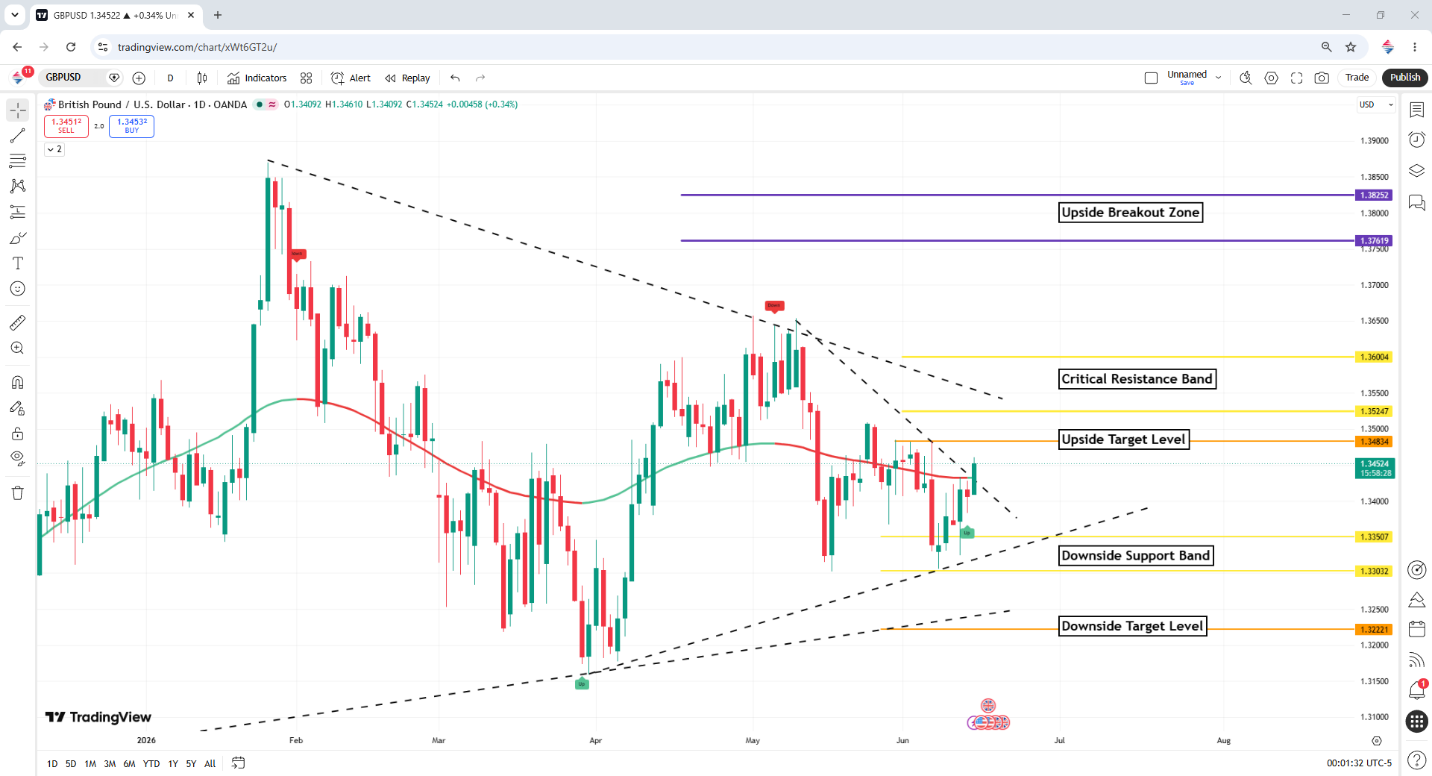
Bullish followthrough is the call this week for the GBPUSD. A challenge of resistance up to the upside target level is expected. Is the trend going to remain a Bull? Odds are strong that the market could push buying pressure up into the critical resistance band. That is about all that is likely out of a rally this week, and remember that overall this currency has been in a wide range trade for months. If there is a turn to support the downside support band should set a floor for the market. Only a failure from last week’s swing low would reverse the positive outlook as fresh selling pressure touches of new move lows that could hit the downside target level before there is a bounce.
USDCHF Weekly Outlook:
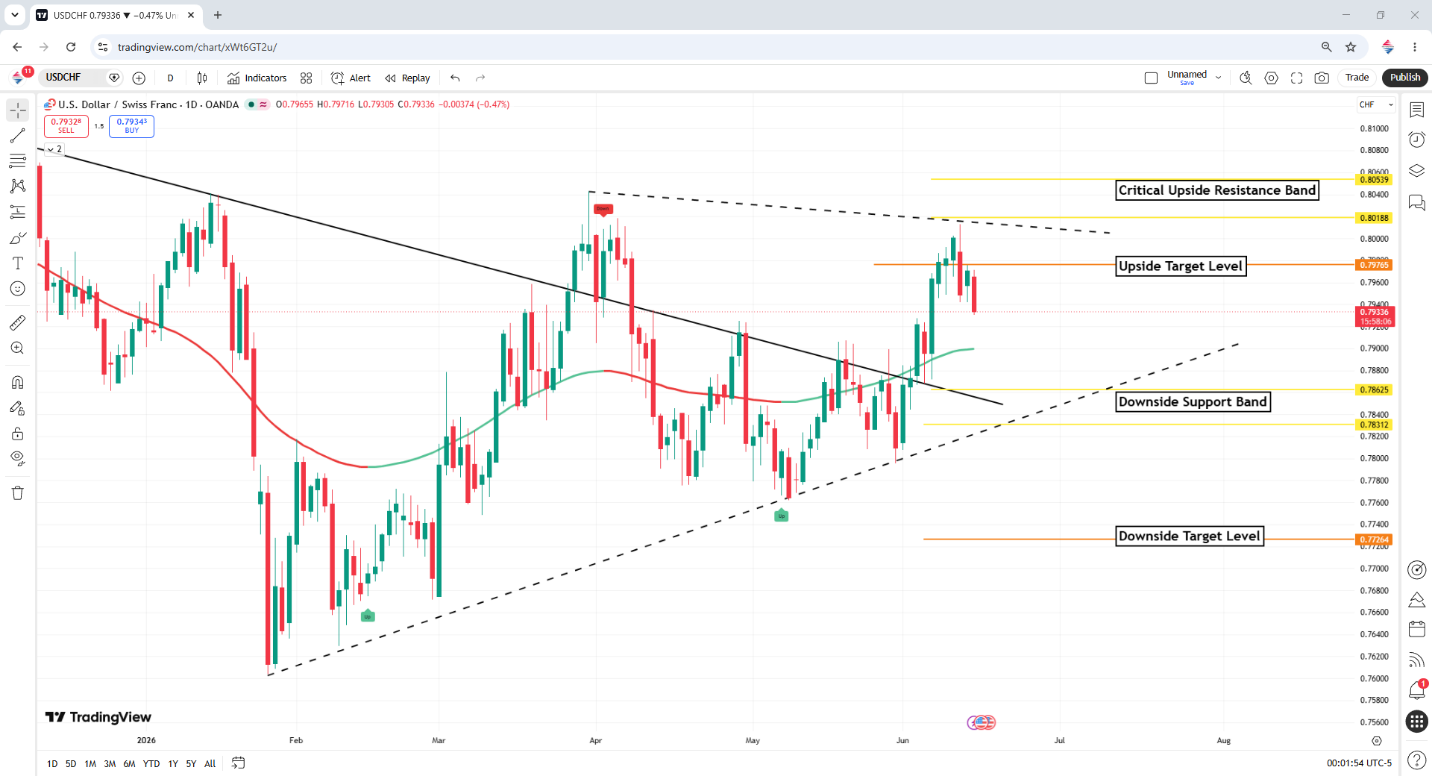
USDCHF traders set a short-term spike high in the market and are likely to give support the once over this week. It is very likely that the Bears could send this currency lower in a push to hit the downside support band. If, there is going to be a bounce then this area should find a floor to bounce off. This is a key area supporting the market. All trading below this area would be an indication that selling pressure is building. Keep an eye on the DXY. Should the Index fall under extreme Bearish pressure USDCHF Bears could benefit by extending the slide all the way to the downside target level. The Bulls have little going for them this week. Only a close above the critical upside resistance band would change the outlook. If this occurs there will be an update to evaluate a potential shift in trend dynamics.
USDJPY Weekly Outlook:
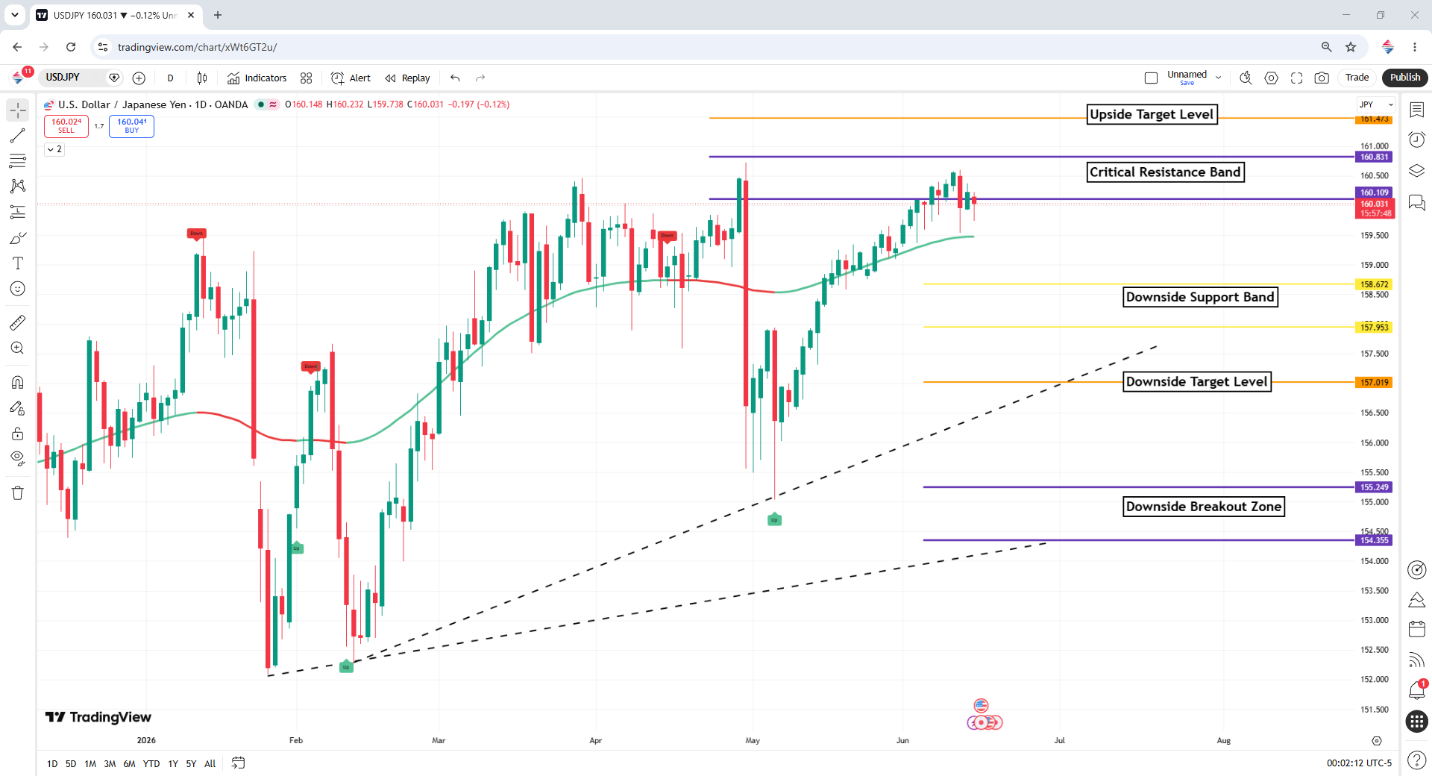
If there is a currency that is limping along it would be the USDJPY. Resistance is holding the Bears back, and lower Crude Oil prices may give this market what it needs to sell off. The critical resistance band is holding firm as a ceiling for the Bulls. Key off last Thursday’s low. A failure from this level should trigger Sell stops and put this FX pair in motion to slip back toward the downside support band. Be careful fading weakness in this market. If Yields drop sharply this week there is a very good chance that the Bears will capitalize off weakness touching off a free fall that could hit the downside target level before the week is out. It will take a close above the critical resistance band to change the Bearish outlook. In the event that new move highs are made this week the upside target level should put a halt to any higher trading. Should there be a close above this area there will be an update.
AUDUSD Weekly Outlook:
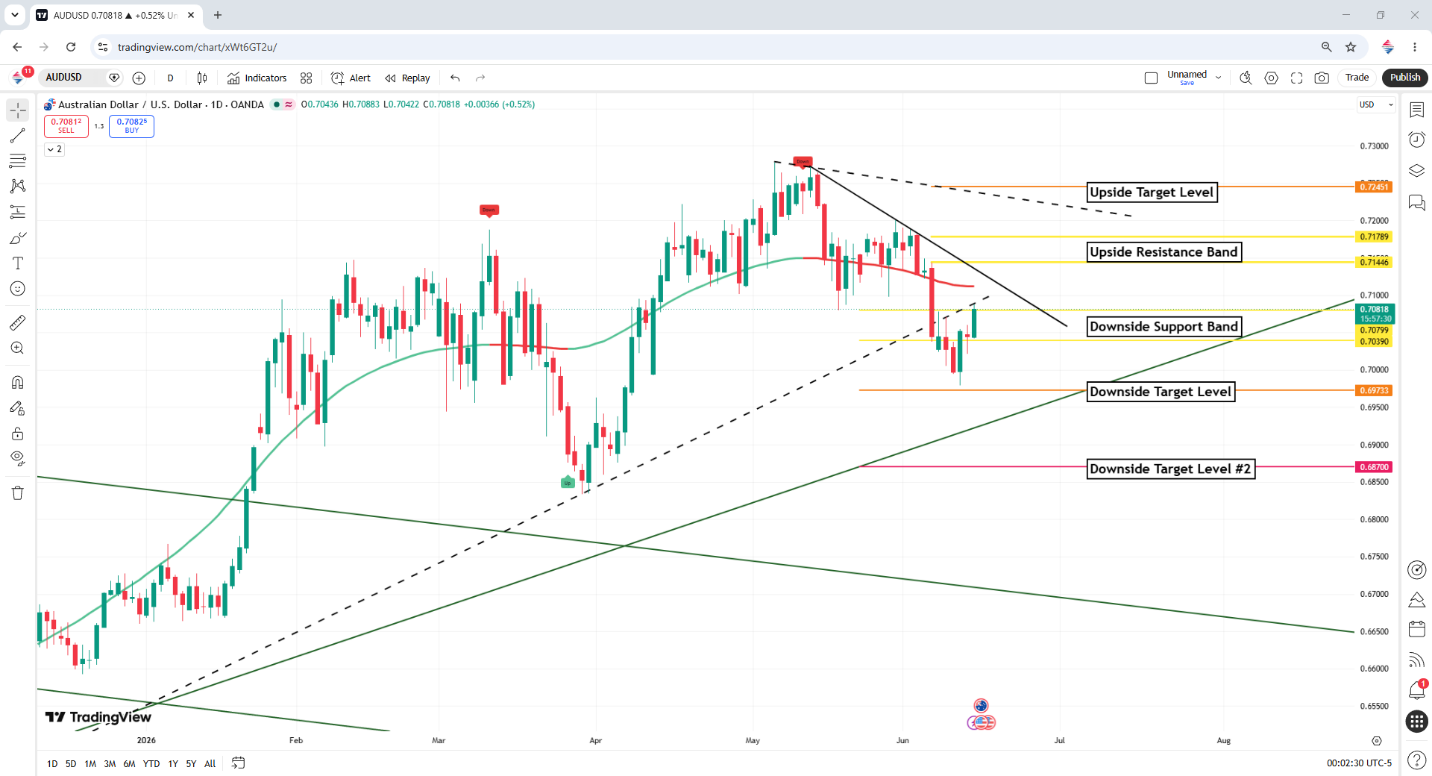
AUDUSD traders have established a short-term swing low and it is likely that the Bulls will continue to lift this currency up toward the upside resistance band early this week. If the recent bounce is just a correction, then the Bulls should not get to much follow through this week. Although unlikely, the Bulls need to get a close above the upside resistance area to confirm strength. Odds are very high that this currency will slip into a digestive range trade by midweek. The key level that could change the positive to neutral outlook to Bearish would be a slide under last week’s low. New move lows would be a negative indication that the Bears are going to press this trend in a big way that could reach the downside target level #2 before months end.
NZDUSD Weekly Outlook:
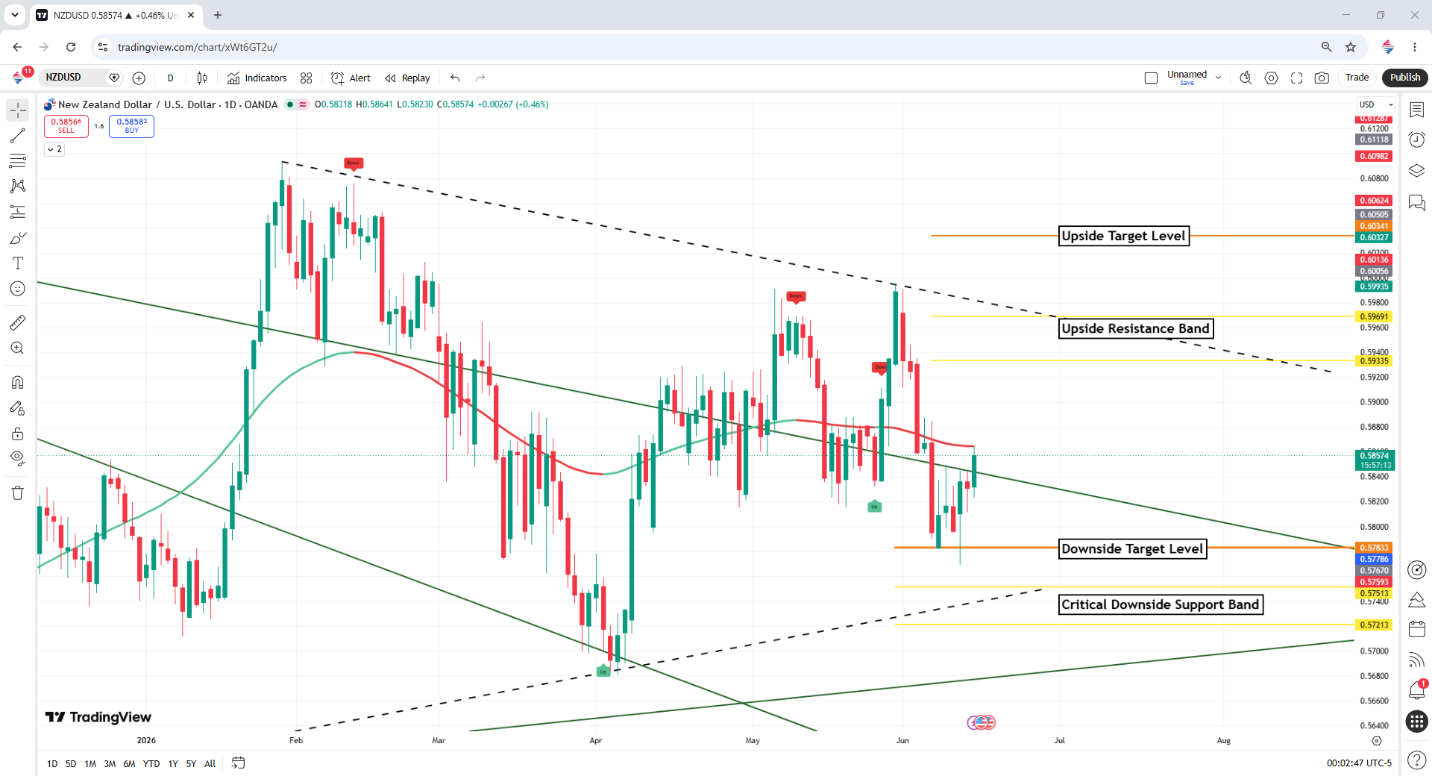
Is it strength or just more wide range trading ahead for the NZDUSD? Short-term the Bulls are expected to continue to lift the market up back into the range trade area that it has been stuck in for months. Get ready for a potential sleeper trade to develop. The best advice is to work long trades and keep your stops tight. Be careful of another test of support. If the Bears get a slide below last week’s low all bets are off for the Bulls. Trading back in this lower area should build as the Bears try and stretch new move lows into the critical downside support band.
USDCAD Weekly Outlook:
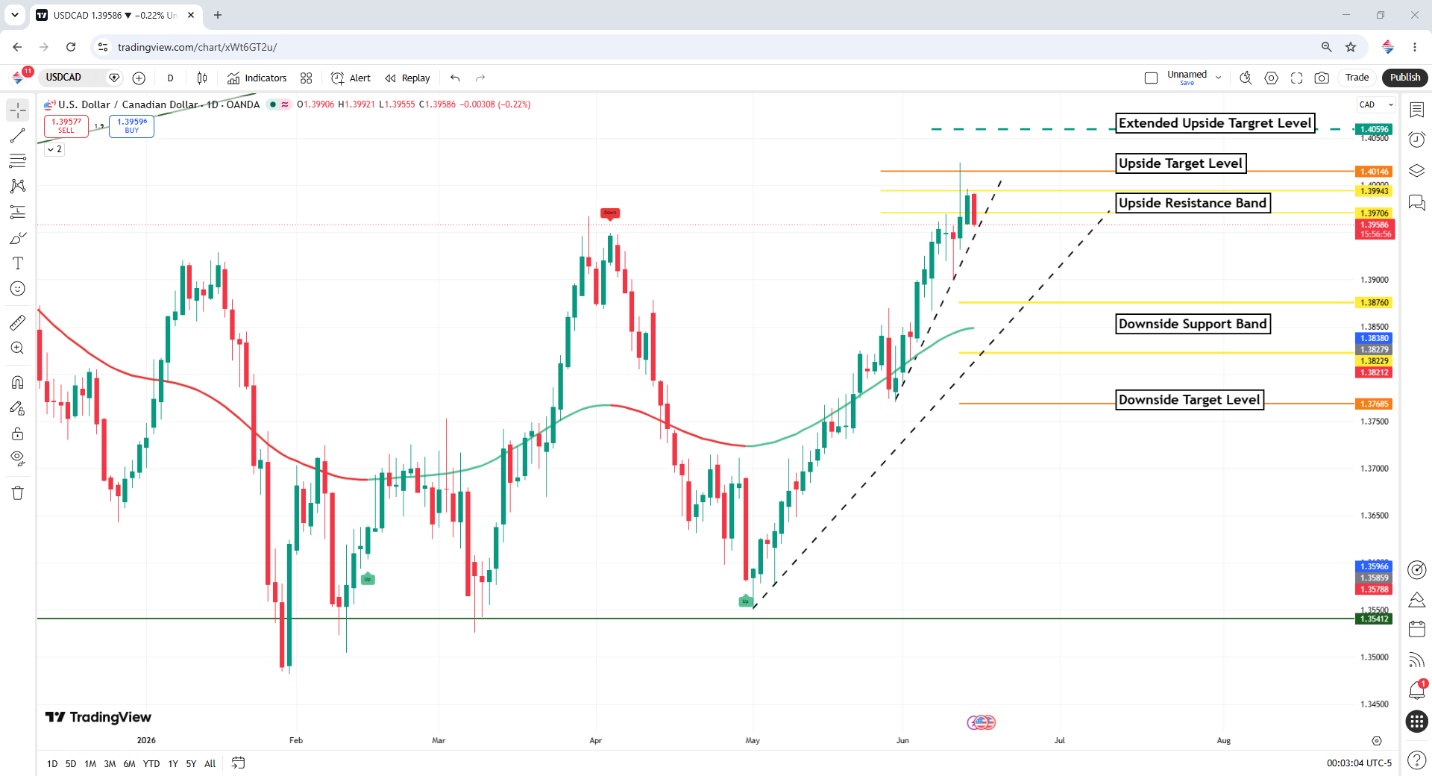
Bullish momentum is showing signs of running out of gas. Key off the upside resistance band for direction. Trading above here could see a spike high liquidity trap press newer highs toward the extended upside target level. This is about all that is likely for the Bulls this week. Sustained trading below the upside resistance band, however, would be a good indication that the Bears are set to touch off a profit taking correction back toward the downside support band. That is about all that should occur for a lower trading market this week, and a sideways range trade is very likely to begin as we head into the middle of the week. Watch the DXY closely in the days to come. If there is a severe sell off in the Index, then the Bears could really start to unwind in the USDCAD. The rally that is in motion is showing signs of weakness, and it is ripe for a correction. Keep this in mind this week if you are actively trading this market.
Federal Reserve Leadership Change: What It Means for USD, Markets, and Global Finance
Out with the old and in with the new. Powell is done, and Kevin Warsh is at the helm of the FED now. Warsh has historically been known as an inflation "hawk" however, he has expressed support for lowering interest rates in the lead-up to his nomination, bringing his stance closer to the President's economic preferences. The appointment of a new Federal Reserve Chairman is one of the most consequential leadership transitions in global financial markets. While the role is often perceived as domestic—focused on U.S. inflation, employment, and interest rate policy—the reality is far broader. The Federal Reserve sets the tone for global liquidity, risk appetite, currency valuation, and capital flows. As a result, a change in leadership at the top of the Federal Reserve can ripple through Forex markets, interest rates, equities, commodities, and emerging economies worldwide.
This article explores how a new Fed Chair can reshape expectations, reprice risk, and influence financial conditions across three major domains: foreign exchange markets, interest rates, and stock markets.
1. The Federal Reserve Chair: Why the Role Matters So Much
The Federal Reserve Chair is not just a figurehead. They serve as the primary communicator of U.S. monetary policy, guiding expectations for the Federal Open Market Committee (FOMC). Even though policy decisions are made collectively, markets heavily interpret the Chair’s tone, philosophy, and reaction function.
A new Chair typically brings one or more of the following shifts:
A different tolerance for inflation vs. unemployment A new approach to interest rate cycles (hawkish vs. dovish bias) Changes in communication style and forward guidance A different interpretation of financial stability risks A revised stance on quantitative tightening or easing
These shifts matter because financial markets are forward-looking. Traders don’t react to what the Fed does today—they react to what they believe the Fed will do over the next 6–24 months.
2. Impact on Forex Markets (USD and Global Currency Flows)
The foreign exchange market is often the first and most sensitive arena affected by a new Fed Chair.
2.1 USD Strength or Weakness Cycle
The U.S. dollar is the world’s reserve currency, and its value is highly sensitive to interest rate expectations. A more hawkish Chair—one who prioritizes inflation control and supports higher rates—typically strengthens the dollar. A more dovish Chair—focused on growth and labor support—often weakens it.
Key mechanism:
Higher expected U.S. interest rates → higher yield advantage → stronger USD Lower expected rates → capital outflows → weaker USD
This affects all major currency pairs:
EUR/USD USD/JPY GBP/USD Emerging market currencies
2.2 Carry Trade Dynamics
Forex markets are heavily influenced by carry trades, where investors borrow in low-yield currencies and invest in high-yield currencies.
A hawkish Fed Chair increases:
U.S. yield advantage Global demand for USD-denominated assets Pressure on emerging market currencies (TRY, ZAR, BRL, MXN)
A dovish Chair reduces carry attractiveness and often triggers:
Risk-on flows into higher-yielding currencies Dollar weakness Capital rotation into equities and commodities
2.3 Volatility in Currency Markets
New leadership often introduces uncertainty. Even before policy changes occur, FX volatility increases due to:
Unclear policy direction Conflicting statements between old and new frameworks Market repricing of terminal rate expectations
Currency traders often see the transition period as a “regime shift window,” where technical levels become less reliable and macro fundamentals dominate price action. Adapting to these shifts is integral in order to increase the odds of trading success during these periods.
3. Impact on Interest Rates and Bond Markets
Interest rates are the core transmission mechanism of Federal Reserve policy. The new Chair directly influences:
Treasury yields Corporate borrowing costs Mortgage rates Global sovereign debt pricing
3.1 Treasury Yield Curve Repricing
One of the most immediate effects of a new Fed Chair is a shift in the U.S. Treasury yield curve.
A hawkish Chair typically leads to:
Rising short-term yields (2-year notes most sensitive) Flattening or even inverted yield curves Higher real yields (inflation-adjusted returns)
A dovish Chair leads to:
Falling short-term yields Steepening yield curves Easier financial conditions
The 2-year Treasury yield is especially important because it reflects expectations of the Fed Funds rate over the next policy cycle.
3.2 Interest Rate Expectations and Forward Guidance
Markets price interest rates based on expectations, not current levels. A new Chair can shift expectations through:
Speech tone (“higher for longer” vs. “data-dependent easing”) Reaction function clarity Commitment to inflation targets
Even subtle language differences can move billions in bond futures.
3.3 Global Spillover Effects
Because U.S. Treasuries are the benchmark “risk-free” asset, changes in their yields affect:
European sovereign debt (Bunds, Gilts) Japanese Government Bonds (JGBs) Emerging market debt spreads
A higher U.S. yield environment often forces global central banks to tighten or defend their currencies, even if domestic conditions don’t warrant it.
This is one of the most powerful transmission channels of Fed leadership globally.
4. Impact on Stock Markets (Equities and Risk Assets)
Equity markets are extremely sensitive to changes in discount rates, liquidity conditions, and risk sentiment—all of which are influenced by the Fed Chair. Market pricing volatility tends to increase sharply when FED action occurs. Option traders benefit immensely from these situations, and it is very reflective by increases in trading volumes globally.
4.1 Valuation Compression or Expansion
Stock valuations are heavily dependent on discount rates. When interest rates rise:
Future earnings are discounted more heavily High-growth stocks are hit hardest Equity valuations compress
When rates fall:
Discount rates decline Growth stocks outperform Valuations expand aggressively
This is why Fed Chair transitions often trigger sector rotation in equities.
4.2 Sector Rotation Effects
Different Fed policy expectations benefit different sectors:
Hawkish Chair environment:
Financials (banks benefit from higher net interest margins) Energy (inflation-driven commodities) Defensive sectors (utilities, healthcare)
Dovish Chair environment:
Technology (growth stocks benefit most) Consumer discretionary Real estate (lower mortgage rates boost demand)
4.3 Liquidity and Risk Appetite
Perhaps the most important influence is liquidity. The Fed controls:
Balance sheet expansion or contraction (QE/QT) Money supply conditions Credit availability
A dovish Chair increases liquidity, pushing investors toward:
Risk-on assets Crypto High-beta equities Emerging markets
A hawkish Chair tightens liquidity, leading to:
Risk-off sentiment Flight to cash and bonds Increased volatility (VIX spikes)
4.4 The “Fed Put” and Market Psychology
One of the most debated concepts in markets is the “Fed Put”—the idea that the central bank will intervene if markets fall too far.
A new Chair may:
Strengthen the perception of a Fed Put (supportive stance) Or weaken it (inflation-first stance)
If investors believe the Fed will step in quickly during downturns, equities tend to rally on dips. If not, corrections become deeper and more prolonged.
5. Global Financial System Impact
The influence of a new Fed Chair extends far beyond the United States.
5.1 Emerging Market Stress or Relief
Emerging markets are highly sensitive to U.S. dollar strength and global liquidity:
Strong USD → capital outflows from EMs → currency crises risk Weak USD → capital inflows → asset inflation in EMs
Countries with high USD-denominated debt are especially vulnerable.
5.2 Commodity Markets
Most commodities are priced in USD, meaning:
Strong dollar → lower commodity prices (oil, gold, copper) Weak dollar → higher commodity prices
Gold, in particular, often reacts inversely to real interest rates. A dovish Fed Chair tends to support gold prices, while a hawkish Chair suppresses them.
5.3 Global Central Bank Coordination
Other central banks often respond to the Fed:
European Central Bank adjusts policy to stabilize EUR/USD Bank of Japan manages yield curve control relative to U.S. rates Emerging market central banks defend currency stability
This creates a global “monetary feedback loop” where Fed policy indirectly dictates global monetary conditions.
6. Market Transition Phases: What Traders Should Expect
When a new Fed Chair takes over, markets typically go through three phases:
Phase 1: Anticipation and Speculation
Markets price in expected policy direction Volatility rises Analysts debate “hawkish vs dovish” leanings
Phase 2: Communication Repricing
First speeches and testimonies shift expectations Yield curves adjust rapidly FX markets lead the move
Phase 3: Policy Confirmation
FOMC decisions validate or challenge expectations Equity markets stabilize or reprice further Long-term trend direction emerges
Understanding these phases is critical for traders in forex, bonds, and equities.
7. Strategic Implications for Traders and Investors
A new Fed Chair is not just a macroeconomic event—it is a trading regime shift.
Forex Traders:
Focus on USD trend structure Watch interest rate differentials Prioritize macro over technicals during transition periods
Bond Traders:
Track 2-year vs 10-year yield dynamics Monitor inflation expectations and real yields
Equity Investors:
Rotate portfolios based on rate sensitivity Adjust exposure to growth vs value sectors
Global Investors:
Monitor capital flows and currency risk Hedge USD exposure during uncertainty phases
Conclusion
The appointment of new Federal Reserve Chairman Warsh at the Federal Reserve represents one of the most powerful macroeconomic catalysts in global finance. Its effects are not isolated to U.S. monetary policy—they cascade through Forex markets, reshape interest rate expectations, and redefine equity market valuations worldwide.
In Forex markets, the USD reacts through interest rate differentials and capital flows. In bond markets, yield curves adjust to new expectations of inflation control and growth support. In equities, valuations expand or contract based on liquidity conditions and discount rates.
Ultimately, the new Fed Chair does not just change policy—they change the rules of pricing risk. And in global markets, that shift reverberates far beyond Washington, influencing capital allocation decisions across every major financial center in the world. Get ready for an interesting second half of the 2026 trading year.
Have a great day everyone. I hope you enjoyed the article.
Best regards,
Teddy Kekstadt
President Forex Trading Unlocked Inc.
